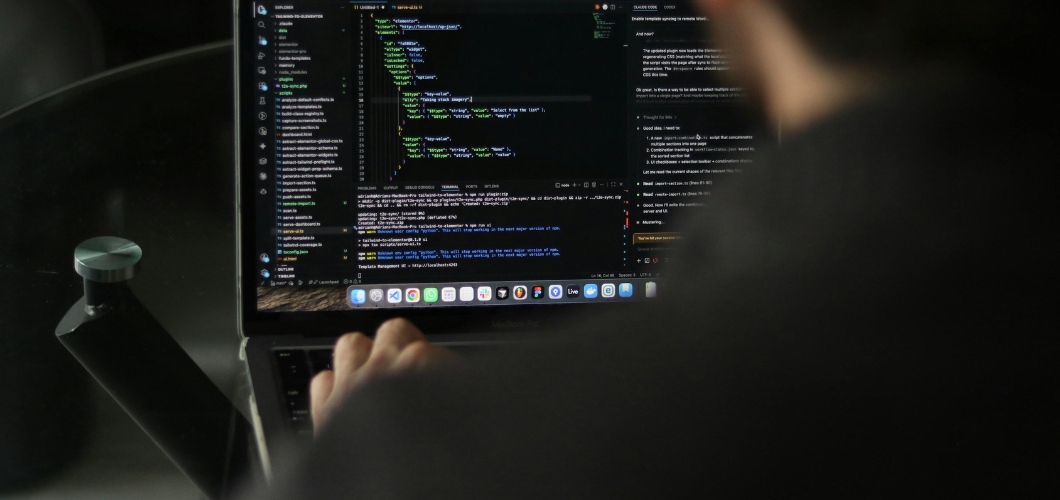

For years, software development has been associated with logic, algorithms, and technical expertise. Success was measured by clean code, efficient architectures, and successful deployments. Today, however, a new conversation is emerging.
As artificial intelligence becomes deeply integrated into engineering workflows, the discussion is no longer limited to technology itself. The real story is about the people using it.
The rise of AI software development is transforming how developers think, collaborate, solve problems, and create value. While much attention focuses on automation and productivity gains, the human impact of this transformation deserves equal attention.
After all, software has always been built by people for people.
AI Software Development Is Changing How Engineers Think
Every major technological shift changes not only what people do but also how they do it.
The arrival of AI-powered coding assistants has altered the daily experience of software engineers. Tasks that once required extensive manual effort—such as generating boilerplate code, debugging common issues, or writing documentation—can now be completed much faster.
This evolution allows developers to spend less time on repetitive work and more time on higher-level thinking.
As AI software development becomes more widespread, engineers are increasingly focusing on architecture, product strategy, system design, and problem-solving rather than purely code production.
The role is evolving from builder to orchestrator.
Creativity Is Becoming a Competitive Advantage
Before diving deeper, it is worth considering a surprising outcome of AI adoption.
Many people assumed AI would make software development more mechanical. In reality, the opposite may be happening.
When developers spend less energy on routine tasks, they gain more capacity for experimentation and innovation. They can explore alternative approaches, test new ideas, and solve problems from different perspectives.
In this environment, creativity becomes increasingly valuable.
The most successful professionals in AI software development may not be those who write the most code, but those who ask the best questions and design the most effective solutions.
Technology can generate code. Human creativity gives that code purpose.
Collaboration Matters More Than Ever
One common misconception is that AI reduces the need for teamwork.
The opposite is often true.
Modern software products require input from engineers, designers, product managers, security specialists, data scientists, and business stakeholders. AI can accelerate technical execution, but it cannot replace the conversations required to align goals, priorities, and user needs.
As organizations embrace AI software development, communication becomes even more important.
Teams must evaluate AI-generated outputs, review decisions, identify risks, and ensure that technology serves business objectives.
The future of software engineering may depend as much on collaboration skills as technical expertise.
The Trust Question
Every technological breakthrough introduces new responsibilities.
AI-generated code can improve productivity, but it can also introduce errors, security vulnerabilities, or unexpected behavior if left unchecked.
This reality highlights the importance of human oversight.
Developers remain responsible for validating outputs, reviewing logic, ensuring compliance, and protecting users. Trust cannot be outsourced entirely to algorithms.
The strongest engineering teams view AI as a collaborator rather than an authority.
This balance between automation and accountability will shape the future of software development for years to come.
AI Software Development and the New Definition of Expertise
Traditionally, expertise was often associated with knowing specific programming languages, frameworks, or technical implementations.
Those skills remain important, but the definition of expertise is expanding.
Today’s developers increasingly need to understand systems thinking, business strategy, ethics, cybersecurity, and user experience. They must know how to work alongside intelligent tools while maintaining critical judgment.
The future of AI software development is not simply about coding faster. It is about combining technical knowledge with human insight.
The developers who thrive will be those who can bridge both worlds.
ALSO READ: How Top Enterprises Are Scaling With AI Cloud Platform Solutions — And What You Can Learn From Them
Technology Advances, Humanity Endures
Every generation of technology raises questions about the role of people.
Yet history consistently shows that tools rarely eliminate human value. Instead, they shift where that value is created.
The same principle applies to AI software development. Artificial intelligence can automate tasks, generate suggestions, and accelerate workflows, but it cannot replace curiosity, empathy, creativity, or judgment.
Those qualities remain uniquely human.
As software development enters its next chapter, the most important innovation may not be the intelligence of the machines we build—it may be how effectively people learn to work alongside them.